

Music
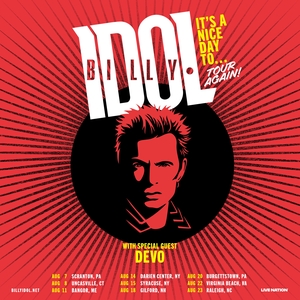
Devo: Billy Idol It's A Nice Day ... To Tour Again Tour
Recorded under the auspices of pioneering producer Brian Eno, 1978’s Q: Are We Not Men? A: We Are Devo! was seen as a call to arms by some and became an underground hit. Others found DEVO’s sound, imagery, and material threatening; Rolling Stone, for example, called the group fascists. But such criticism missed the point: DEVO dramatized conformity, emotional repression, and dehumanization in order to attack them, not to pay tribute to them. While 1979’s Duty Now for the Future was another strong effort, the band broke through to the mainstream with 1980’s Freedom of Choice, which contained the platinum-selling hit single, “Whip It”, and represented a peak in their songwriting. The video for “Whip It” became an MTV smash, juxtaposing the band’s low-budget futuristic look against a down-home farm setting and hints of S&M. DEVO’s next two albums, New Traditionalists and Oh NO It’s DEVO! continued their 1980’s decade world touring success accompanied by the hit songs, “Beautiful World” and “That’s Good” respectively. Shout was released in 1984, and Total Devo in 1988, followed by a live album titled Now It Can Be Told: DEVO Live at The Palace in 1989. After releasing a studio album entitled Smooth Noodle Maps in 1990 the band left the world of touring and recording to pursue film and TV projects. During the 5 year hiatus, the band released Hardcore Devo Volumes 1 and 2, early 70’s era compilations that showcased DEVO’s seminal, minimalist electronic rock recordings. Those mind-bending works were followed by the release of a pair of double-disc DEVO anthologies: the first was the half-hits/half-rarities Pioneers Who Got Scalped: The Anthology (on Rhino), while the second was the limited-edition mail-order release Recombo DNA (on Rhino’s Handmade label), the latter of which was comprised solely of previously unreleased demos. Also during this time,Mark Mothersbaugh moved into composing for commercials and soundtracks, writing theme music for MTV’s Liquid Television, Nick
Sources: triblive